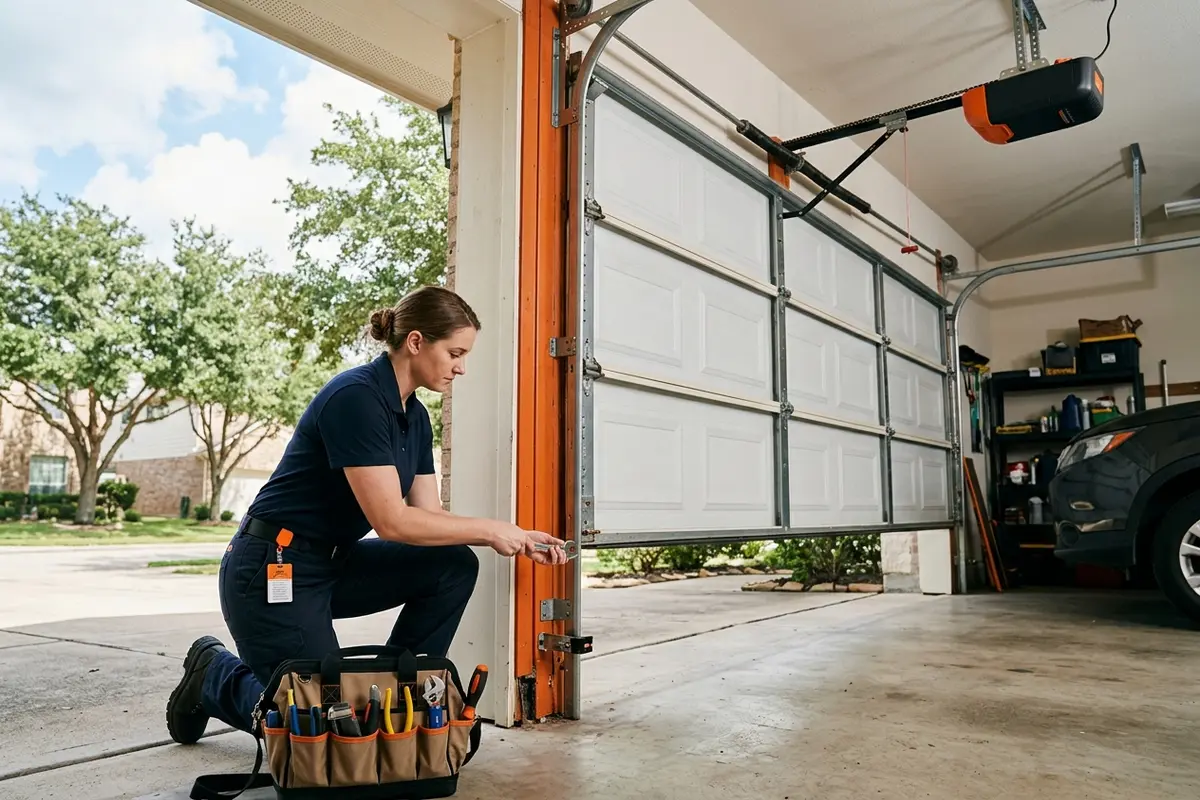
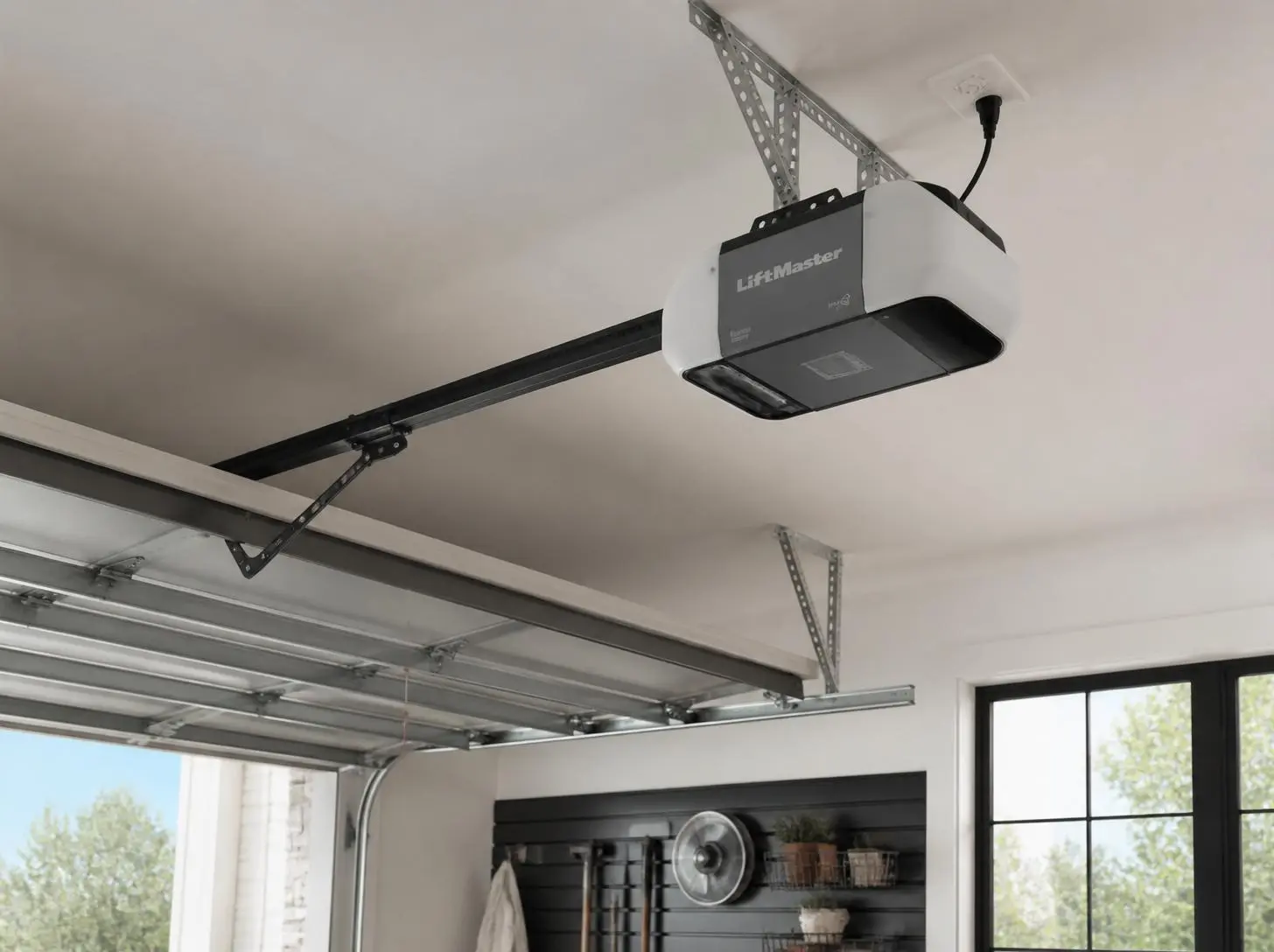
Your garage door opener not working can throw off your entire morning, especially when you’re already running fifteen minutes late. You press the button. Nothing. Before you assume the worst, a few common issues might explain it, and our garage door opener repair technicians can walk you through what to check first.
You should stay calm and work through a short checklist before calling for help. Many opener issues come from small, fixable causes rather than a fully broken motor. Checking the basics first can save you both time and money, and it often resolves the issue faster than waiting on a scheduled service call.
Power issues cause a large share of opener problems, more than people assume. Check whether your opener is plugged in securely. Check your breaker too — hasn’t tripped, has it? A simple power interruption during a storm can knock an opener offline without any visible damage at all, and our garage door repair team sees this constantly after severe weather rolls through Houston.
Test your wall switch separately from your remote. If the wall switch works but the remote doesn’t, the problem’s probably the remote itself, not the opener unit.
Why Is Your Opener Remote Not Responding?
Opener remote not responding issues usually trace back to a few simple causes. Weak batteries. Signal interference. A remote that’s lost its programming connection to the opener. Any of these will stop a remote from working properly, and it’s rarely as dramatic as people expect.
Checking Remote Batteries First
Replace your remote batteries as a first step, even if they seem fine. Batteries lose power gradually. A remote working intermittently often just needs a fresh set to run reliably again — cheap fix, worth trying before anything else.
Reprogramming Your Remote
You can often reprogram the remote yourself using the instructions in your opener’s manual. If that doesn’t solve it, the remote’s internal circuit board may have failed, which usually means a replacement remote.
Common Garage Door Sensor Issues
Garage door sensor issues often cause a door to reverse immediately or refuse to close at all. Your opener uses two small sensors near the bottom of the track to detect obstructions. Misaligned or dirty sensors can make the opener think something’s blocking the door even when the path is completely clear.
A few things worth checking yourself before calling for repair:
- Confirm both sensor lights glow steadily, not blinking
- Wipe sensor lenses clean of dust or cobwebs
- Check nothing sits in the door’s path near the sensors
- Verify sensors face each other directly across the track

Signs of Opener Motor Failure
Opener motor failure usually shows warning signs before a full breakdown. Humming without moving the door. Running slower than usual. Stopping partway through a cycle. Any of these point to trouble ahead.
When Motor Repair Makes Sense
Minor motor issues — worn gears, a failing capacitor — often don’t need a full unit replacement. Our technicians inspect the motor and give you an honest call between repair and replacement based on your opener’s age and condition. Checking your garage door springs during the same visit helps rule out spring tension as a hidden cause of motor strain, which happens more than you’d think.
Could a Dead Opener Battery Be the Problem?
A dead opener battery affects more than handheld remotes. Many modern opener units include a battery backup system that keeps the door working during power outages. If that backup dies, your opener can behave unpredictably even when your home’s regular power supply is fine.
Diagnosing an Opener Circuit Board Problem
An opener circuit board problem sits behind a lot of the more confusing opener issues homeowners deal with. Flickering lights, random activation, a completely unresponsive unit despite working power — often points toward circuit board damage, sometimes caused by a power surge during a storm.
The U.S. Consumer Product Safety Commission recommends regular inspection of garage door opener safety features, including sensors and reversal mechanisms, to reduce the risk of injury or property damage from a malfunctioning system.
What to Expect From a Professional Opener Repair Visit
A full diagnostic comes first, always. Our technicians test your remote, wall switch, sensors, and motor separately to pinpoint the exact cause instead of guessing or swapping parts that don’t need it. Saves you money. Avoids repeat visits for the same underlying problem.
You will also get a clear explanation of what caused the issue and how to prevent it going forward. Whether the problem traces back to a power surge, worn gears, or simple sensor misalignment, we walk you through the fix and answer any questions before we consider the job complete. Expect same-day service in most cases too — a broken opener can leave your car stuck inside or your home less secure than usual, and we prioritize these calls for exactly that reason.

Local Considerations for Houston Homeowners
You should pay extra attention to your opener’s circuit board and power supply after storm season in Houston, since power surges from lightning and grid fluctuations are common during heavy weather. A basic surge protector on your opener’s outlet is a small investment that can prevent a much larger repair bill down the road.
You will also want to check your battery backup system before hurricane season each year if your opener includes one. A working backup keeps your garage functional during power outages, which matters more in this region than in areas with more stable year-round weather.
Frequently Asked Questions About Opener Repair
Should You Try to Fix the Opener Yourself First?
A few basic checks are safe to handle solo — battery replacement, sensor cleaning, confirming power supply. Anything involving the motor, gears, or circuit board should go to a trained technician, since incorrect handling can cause further damage or safety risks.
How Much Does an Opener Repair Typically Cost?
Varies a lot based on the specific issue, from a simple sensor adjustment to a full motor or circuit board replacement. Our technicians always diagnose the exact problem first and give you clear pricing before any work begins.
When Does It Make More Sense to Replace the Opener?
Consider replacement if your opener is more than ten to fifteen years old, lacks modern safety sensors, or has needed frequent repairs recently. Newer models also offer smartphone connectivity and battery backup, which older units typically don’t include.
Why Does the Opener Work Sometimes but Not Other Times?
Likely a loose wire, a failing capacitor, or intermittent sensor interference. This kind of on-and-off behavior tends to get worse over time, so scheduling a diagnostic visit early usually costs less than waiting for a full breakdown.
If your garage door opener still is not working after these checks, contact Ultra Garage Door Services and our Houston team at Ultra Garage Door Services will diagnose and fix the problem quickly. You can also view our full range of repair services for anything else your door might need.